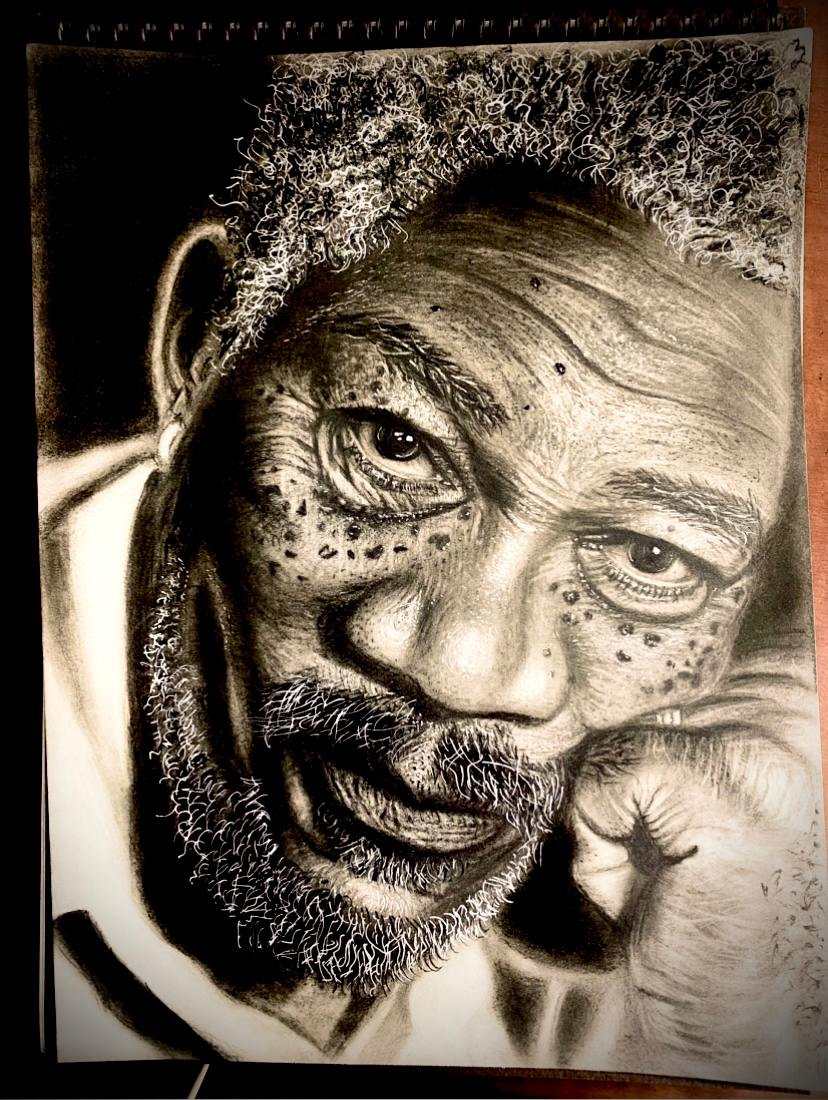
The success of any expert portrait commission depends significantly on the reference photographs provided. While skilled artists can work with imperfect references, better source material enables better results. Understanding what makes a photograph suitable for portrait work helps clients provide references that lead to exceptional commissioned art.
Many clients worry they don't have "good enough" photos, but you might be surprised by what works well for portrait purposes. The criteria differ from what makes a photo look good on social media or in a family album. Let's explore what artists look for and how you can evaluate your own photographs.
Resolution and Clarity
For a expert portrait commission, we need to see details clearly. This doesn't necessarily mean you need a professional camera—modern smartphones capture sufficient resolution for most portrait work. What matters more is that the image isn't blurry, pixelated, or heavily compressed.
When evaluating your photos, zoom in on the subject's face, especially around the eyes. Can you see individual details? Can you see the texture of skin, individual hairs in eyebrows, and the subtle tonal variations around the eyes? If these details are visible when zoomed, the photo likely has sufficient resolution.
Avoid screenshots, heavily filtered images, or photos that have been significantly cropped and enlarged. Each of these processes degrades the original quality, making it harder to extract the details needed for accurate portrait work. If you've applied filters to a photo, try to locate the original unfiltered version.
Lighting Considerations
Lighting might be the most important factor in reference photography. For a expert portrait commission, good lighting reveals the three-dimensional form of the subject through highlights and shadows. It shows the tonal range we'll recreate in the portrait and defines the mood of the piece.
Natural daylight generally produces the best results for portrait references. Indoor photos near windows or outdoor shots in open shade reveal facial features without harsh shadows. Avoid direct midday sun, which creates harsh shadows, and flash photography, which flattens features and causes unnatural highlights.
That said, dramatic lighting can work beautifully for certain portraits. Strong directional light creates mood and visual interest. If you have a photo with interesting lighting that captures your subject's personality, don't dismiss it just because it's not conventionally lit. Share it with us and we can discuss whether it will work for your expert portrait commission.
Expression and Personality
Technical quality matters, but expression matters more. A slightly imperfect photo that captures genuine personality will produce a better expert portrait commission than a technically perfect image showing a stiff, formal expression. We can work with moderate technical limitations; we cannot add personality that isn't in the source.
For portraits of people, candid moments often reveal more personality than formal poses. A genuine laugh, a contemplative gaze, a characteristic gesture—these expressions tell us who your subject is beyond their physical appearance.
Look through your photos for the ones that make you smile because they capture something true about your subject. These emotional reactions indicate photographs that show personality worth preserving in a expert portrait commission.
Angle and Composition
The angle from which a photograph is taken significantly affects how we can compose the portrait. For most expert portrait commission commissions, eye-level shots work best. Photos taken from above or below can work but may create unexpected proportions when translated to a formal portrait composition.
For portraits of people, straight-on or slight three-quarter angles tend to work best. Extreme angles can work for stylized portraits but may not suit traditional commissioned work.
Consider what portion of the subject you want included in the portrait. Head-only compositions require different references than half-body or full-body pieces. Let us know your preference so we can evaluate whether your photos support that composition.
Background and Context
While we typically simplify or replace backgrounds in finished portraits, the background in your reference photo can still affect the result. Busy backgrounds make it harder to see the subject's edges clearly. Backgrounds that closely match the subject's coloring can obscure important details.
The best references show clear distinction between subject and background. Clear separation between the subject and background allows us to see edge details like hair outlines and clothing contours.
Don't worry if your best expression photos have imperfect backgrounds—we can work with that. But if you're taking new photos specifically for a expert portrait commission commission, choosing a simple, contrasting background will help us create the best possible result.
Multiple Photos Are Welcome
When commissioning a expert portrait commission, providing multiple reference photos gives us options and information. One photo might have the best expression while another shows color or details more clearly. We can composite information from multiple sources to create the ideal reference for your portrait.
Don't limit yourself to a single "best" photo. Send us your top five or ten options and let us evaluate them together. We might see potential in photos you'd dismissed, or we might confirm that your favorite really is the strongest choice.
If you're working from older or limited photographs—memorial portraits often involve this situation—send whatever you have. Skilled artists can work with challenging references, and we'd rather see everything available than miss an important option.
What If You Don't Have Good Photos?
Sometimes clients want to commission a expert portrait commission but lack suitable reference photographs. This happens frequently with memorial pieces or when commemorating someone from before the digital photography era. We have experience working with challenging reference situations.
Options include compositing multiple imperfect photos, working from small or damaged original prints, or taking artistic license with unclear details. We discuss these situations individually, explaining what's possible and ensuring you understand any limitations before beginning work.
For living subjects, we sometimes recommend scheduling a photography session before the commission. This doesn't require professional photographers—often a friend with a smartphone in good natural lighting produces excellent results. We can provide guidance on poses and settings that will yield the best references for your expert portrait commission.
Ready to Share Your Photos?
Armed with this knowledge, review your photos with fresh perspective. Look for clear details, good lighting, genuine expressions, and appropriate angles. Gather your best options and contact Artistry by Rasa to begin discussing your expert portrait commission commission.
Remember: we're here to help you navigate the reference selection process. If you're unsure whether your photos will work, share them anyway. We'll provide honest feedback and guidance toward the best possible outcome for your commissioned artwork.